The Poplar Forest in Virginia offers a more private look at Thomas Jefferson than his better-known home at Monticello. While Monticello became one of Jefferson’s great architectural statements, Thomas Jefferson’s Poplar Forest near Lynchburg was designed as a retreat from public life, family obligations, and the steady stream of visitors at Monticello. Jefferson began construction on the octagonal house in 1806 and, after leaving the presidency in 1809, returned several times a year to read, write, garden, refine his architectural ideas, and oversee the plantation. Today, the property offers visitors a chance to explore one of Jefferson’s most distinctive designs, along with exhibits, historic grounds, and walking trails.
If you’re planning a stay in the area, don’t miss out on the many things to do in Lovingston and Charlottesville as well. Spend a day exploring Nelson County’s wineries and breweries, or head north toward Charlottesville for historic sites, local restaurants, shops, and the vineyards of the Monticello Wine Trail. Outdoor enthusiasts can make time for hiking, overlooks, and waterfalls along the Blue Ridge Parkway, while a slower afternoon might mean wine tasting with mountain views. With Lovingston positioned between the Blue Ridge Mountains and Charlottesville, it’s easy to enjoy a getaway that combines history, outdoor adventure, food, and Virginia wine.
Our Bed and Breakfast near Charlottesville, VA, sits in Lovingston between the attractions of Nelson County and the Lynchburg area, putting both Jefferson’s retreat and Virginia wine country within easy reach. Our guests love being able to explore Lynchburg while also enjoying access to Lovingston and Charlottesville, something a typical Lynchburg, VA bed and breakfast can’t offer. From here, you can spend the day exploring Poplar Forest and Lynchburg, then trade the city for Blue Ridge Mountain views, vineyard scenery, and a quiet front porch when you return. Book your stay today!
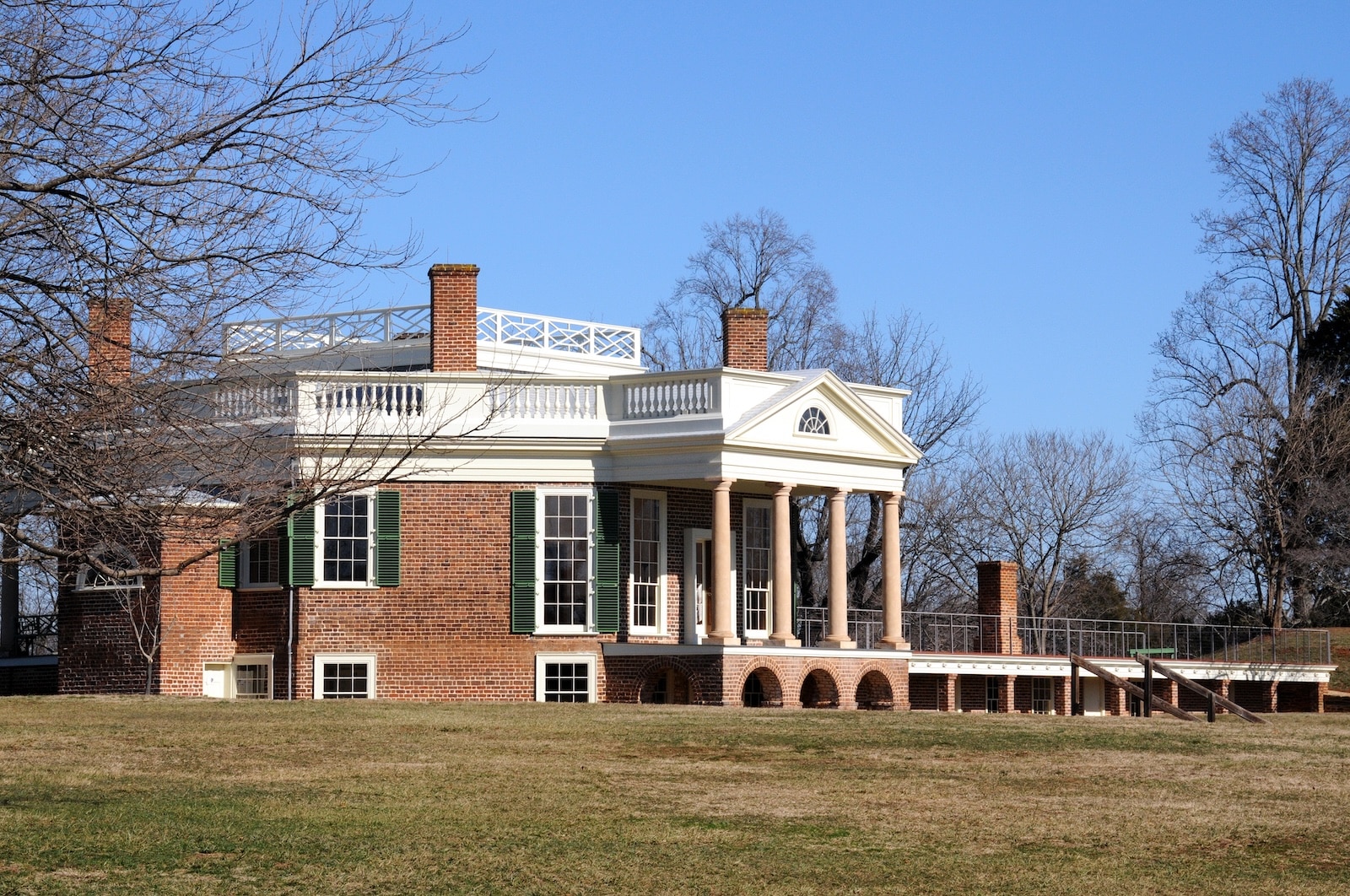
What to Know Before You Visit Poplar Forest, Virginia
Thomas Jefferson designed Poplar Forest, Virginia, around an equal-sided octagon, creating what the estate describes as one of the first octagonal homes in America. The design blends ancient Roman, Renaissance Palladian, 18th-century French, British, and Virginia influences, with details inspired in part by buildings Jefferson encountered in France. Construction began in 1806 under Jefferson’s direction, with both free and enslaved craftsmen involved in building the retreat, and the main house was considered basically complete by 1812. After retiring from public life, Jefferson returned three or four times a year. That history is important to understanding Thomas Jefferson’s Poplar Forest in Virginia. It was simultaneously his intensely personal architectural experiment and part of a plantation whose operation depended on enslaved labor.
A visit centers on the house, but Poplar Forest tours can be either docent-led or self-guided. Docent-guided tours are currently scheduled at specific times, depending on docent availability. If a docent isn’t available, the Poplar Forest app provides a self-guided audio tour of the main level and Wing of Offices. General admission also includes the lower-level exhibits, ornamental grounds, the 1857 Slave Dwelling, and the archaeological Slave Quarter Site, where exhibits explore the lives of the enslaved people who lived and worked here. There is an adult admission fee, with discounted rates for seniors, military members, teens, college students, and children. Give yourself at least 90 minutes for the house and exhibits, and longer if you plan to explore outside.
The Poplar Forest walking trail is worth adding even if you’re primarily coming for the history. The property maintains 1.85 miles of trails alongside its 2.2-mile Parkway, giving visitors a chance to walk or run through a portion of the more than 600 acres of historic landscape preserved around the retreat. The trails at the Poplar Forest in Virginia are free and open to the public from dawn to dusk seven days a week. Admission is only required when you enter the historic house and the grounds immediately surrounding it. Leashed dogs are welcome on the trail system as well. It’s an easy way to add some outdoor time to a day otherwise spent touring museums.
If you’re planning to include Thomas Jefferson Poplar Forest in Virginia in a longer itinerary, check the current seasonal hours before visiting. The property is roughly 20 minutes west of Lynchburg, making Poplar Forest in Lynchburg, VA, a particularly easy stop while visiting downtown restaurants, the James River, or other things to do near Lynchburg, VA.
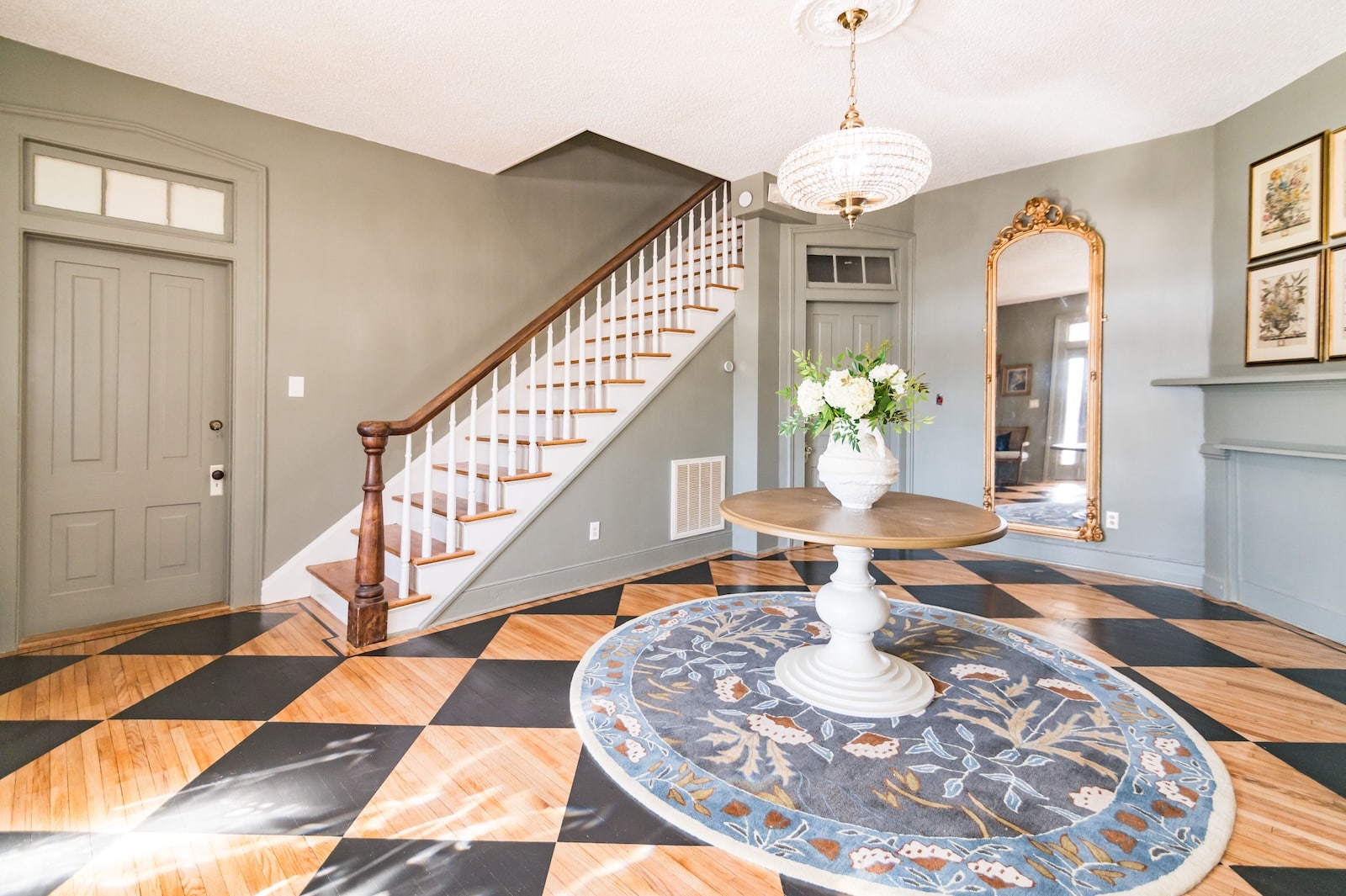
Where to Stay: A Bed and Breakfast Near Charlottesville, VA
After a morning spent exploring the Poplar Forest in Virginia, you’ll want to return to a historic property with plenty of room to slow down. Our Bed and Breakfast near Charlottesville, VA, was originally built in 1874 as the private home of a prominent Virginia state judge and remained connected to the Lovingston community for three generations before becoming the boutique Bed and Breakfast it is today. The main inn has six individually decorated guest rooms, each with a private ensuite bath and a seating area. Guests who prefer a more independent stay can choose the adjacent 1910 Farmhouse, which has three ensuite guest rooms, self-check-in, a shared kitchen, and continental breakfast delivery.
Breakfast in the main house isn’t an afterthought, either. Guests staying in the six inn rooms receive a homemade, two-course breakfast each morning except Tuesday, when a continental breakfast is served at 8 a.m. Beyond breakfast, guests can stroll the one-acre working vineyard, relax beside the pond, take a swim in the seasonal saltwater pool, or settle around the gas fire pit overlooking the mountains. If you’re considering a Bed and Breakfast in Charlottesville, VA, Lovingston offers a quieter alternative with easy access to Thomas Jefferson’s Poplar Forest, the Monticello Wine Trail, and the Blue Ridge Mountains. Book your stay today!