San Juan Island boasts beautiful scenery, ideal whale-watching lookouts, and wonderful restaurants, shops, and galleries. However, it also has some interesting history that you might not know about. There is a fascinating parallel in American and English history on San Juan Island that dates back to 1859, when the United States and Great Britain agreed to a joint occupation of the island. With this agreement came the separation of groups, one on either side of the island. Thus, the American Camp and English Camp were born.
These two separate camps now make up the whole of the San Juan Island National Historic Park, and you really can’t learn about one without talking about the other as well! Visiting both locations is a must, as they offer completely different landscapes. English Camp is on the Northern end of the island and looks out over the quiet inlet of Garrison Bay, whereas the American Camp is on the South end, perched above the Haro Strait. Heading to these parks is one of the many great things to do on San Juan Island, with hiking trails, historical markers, and lovely views.
Before you start filling your itinerary for your island getaway in Washington State, you’ll want to secure your lodging. While there are only a handful of hotels on San Juan Island to choose from, our charming collection of rooms, suites, and cottages that make up the Tucker House Inn & Harrison House Suites makes such a comfortable home base. Your stay includes a delectable breakfast delivered to your door, and the welcoming hospitality that you’ll soon come to find our small island community is known for. Check out our upcoming availability and book your room today!
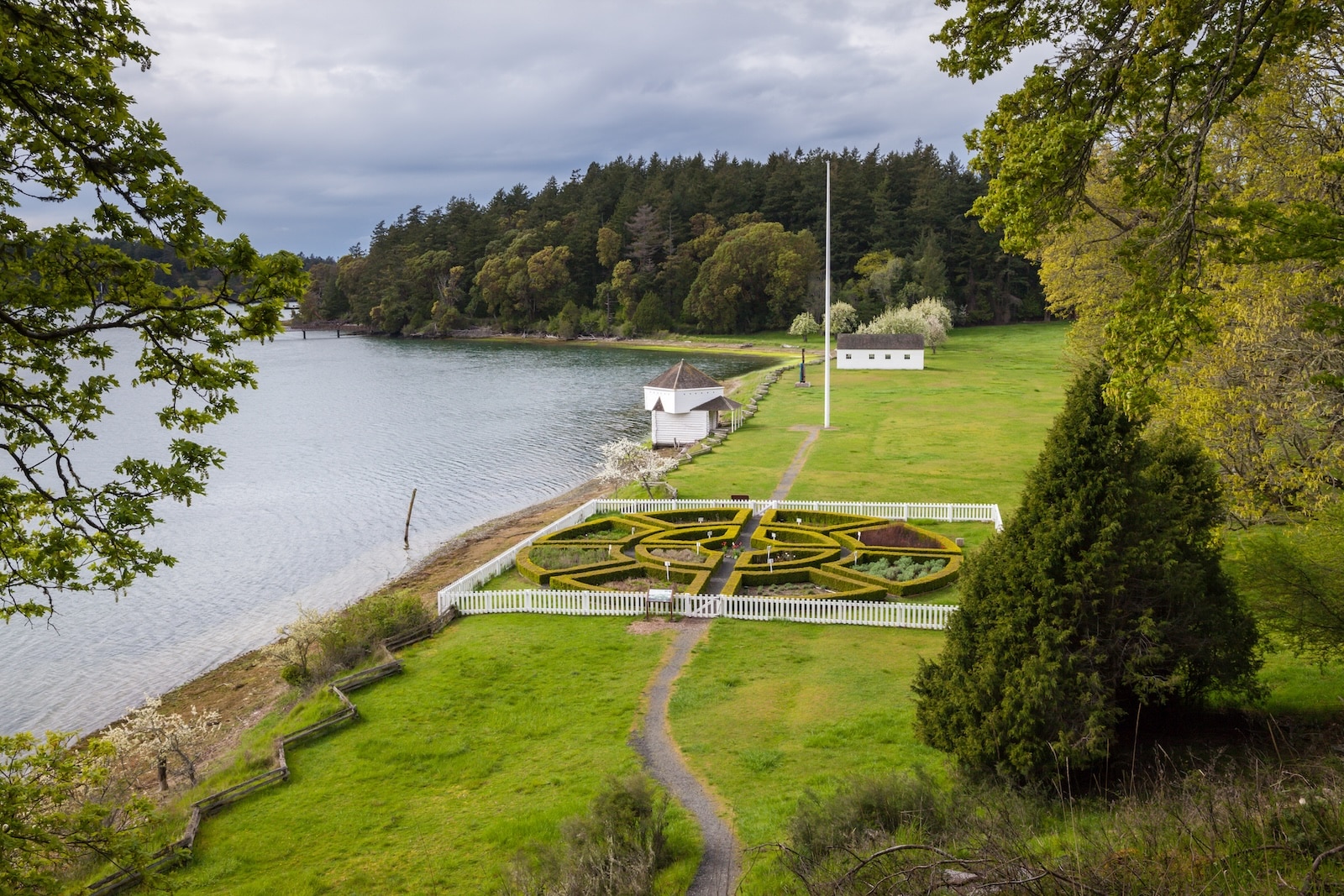
The History of English Camp & American Camp
While these two recreation areas are now vacant of soldiers, the remnants remain and are beautifully maintained for visitors from near and far to learn more about this part of our island’s history.
English Camp on San Juan Island
After the British and American governments agreed on the joint occupancy of San Juan Island, the Royal Navy began looking for a station for the British Royal Marine Light Infantry. The English Camp site was selected on Garrison Bay, which was 15 miles northwest of the American Camp, on the opposite end of the island. The bay shore was well-sheltered with plenty of grass and water and included an 11-mile trail to Hudson’s Bay farm at Bellevue.
In 1860, the British marines landed with the materials to build a storehouse and other important facilities. A commissary was constructed, along with barracks and cookhouses, and then a garden was planted; in its place today is a formal garden. In 1866, the English Camp on San Juan Island was at its peak, and the following year, new quarters were constructed for a new captain, William Delacombe. A few years later, in 1872, the English lost command of the island and departed, leaving behind their home for the Crook family, who had purchased the site from the United States government. The Crooks then occupied many of the structures at the English Camp on San Juan Island for over 30 years.
American Camp on San Juan Island
The American Camp was originally slated for a grassy slope 200 yards from the shoreline of Griffin Bay. Here, Captain George E. Pickett and Company D, 9th Infantry, settled in this area briefly in 1859, a year before the British would arrive at their English Camp on San Juan Island. The American military presence on the island was established at that time and lasted for around 14 years. However, the location shifted just five days after landing. The American Camp was moved to the north slope of the ridge just north of the Hudson’s Bay Company barns.
Large tents were set up, along with clapboard buildings that included a hospital, barracks, and quarters for laundresses and officers. A fortification was constructed on an eastern ridgetop with a view of both the strait and the bay, and this post remained manned through some of the most tumultuous times in American history. The brave American troops endured terrible quarters, bad food, and isolation; some committed suicide, while others deserted. Yet, most endured and contributed to the peace that still reigns on San Juan Island.
The Pig War
Though the American and English camps on San Juan Island got along well for the most part, a crisis surfaced on June 15, 1859, when American Lyman Cutlar shot and killed a company pig rooting in his garden. This was during the joint occupancy of the island, though the camps had not yet been officially established. As a result of the pig shooting, British authorities threatened to arrest Cutlar and evict the Americans from the island as trespassers.
At this point, Company D, 9th U.S. Infantry under George E. Pickett (of later Civil War fame) was brought to San Juan. Pickett’s 64-man unit landed on July 27. Tensions were mounting, and a war was imminent, but the then-United States president, James Buchanan, was alarmed by the issue and sent some men to try to calm the situation. In the end, the potential Pig War did not occur, and the two camps settled on opposite ends of the island. In 1871, the Treaty of Washington decided that the land would remain in international arbitration, and just a year later, the land was officially given to the United States.
Modern Day American and English Camp on San Juan Island
Each year at the English Camp on San Juan Island, there is an encampment sponsored by the San Juan National Park that features reenactors, a celebration of peace, and camp-life demonstrations of music, blacksmithing, spinning and weaving, cooperage, and carpentry. Period uniforms will be donned by reenactors, and black powder rifled musket demonstrations will take place. They often host a candlelight ball in the English Camp barracks with music, dancing, and refreshments.
There are some fantastic hiking trails at the American or English Camps on San Juan Island during your visit. The American Camp National Park offers many trailheads, such as Jakle’s Lagoon Trail, which travels through rich cedar forests before heading down to the lagoon. At the English Camp Park, the Young Hill Trail is a popular 1.6-mile route and leads to a beautiful overlook. One of the most noticeable differences in the two parks is the landscape; you’ll really see the difference for yourself, and add both to your next itinerary to the San Juan Islands.
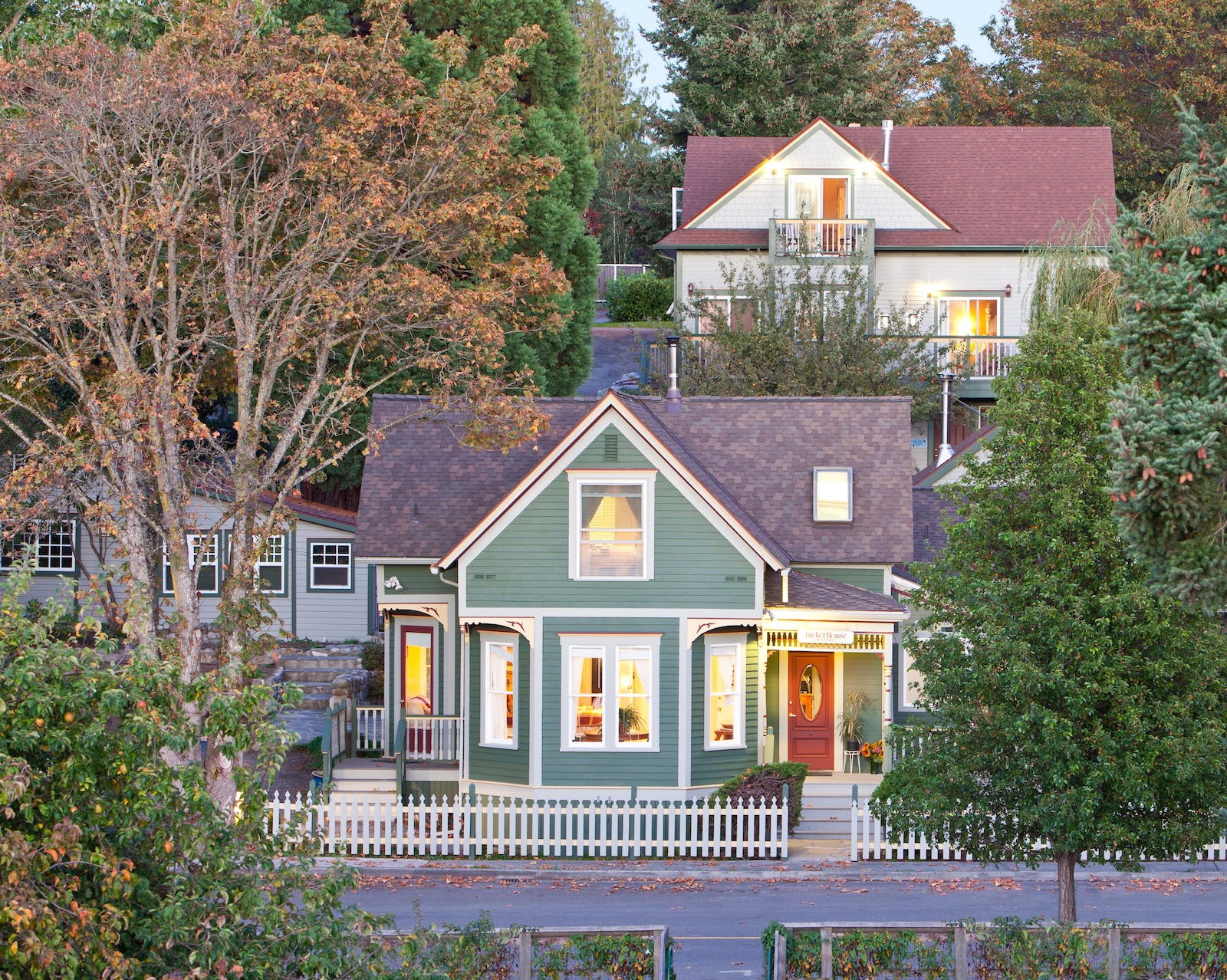
Hotels in the San Juan Islands for Comfortable Lodging
During your visit to the American or English Camp on San Juan Island, stay at one of the best boutique hotels on San Juan Island. Situated just two blocks from Friday Harbor’s ferry terminal and historic downtown, our inn collection is within walking distance from whale watching expeditions, outdoor adventures, and eclectic, locally-owned shops. You’ll be in the perfect location for starting your day off with a peaceful breakfast in your guest room and then heading out for an island adventure.
We have so many amenities included in your stay! Guests can borrow complimentary outdoor equipment for hiking, biking, and kayaking, or call the concierge to arrange a full island adventure. After a day on the water or hiking trails, head just a block down the way to Coho Restaurant, which offers a farm-to-table fine-dining experience showcasing locally sourced flavors from the San Juan Islands and an award-winning wine cellar. You don’t have to go far to feel like you’re worlds away. Book your lodging today!