If you’re a nature lover, a trip to Washington Oaks State Park is a must when you come to Flagler Beach. From the lush tropical flora to the unique coquina rock formations on the beach, this Florida State Park is one of the most visited in the region. This historic 425-acre park features stunning coastal beauty, formal gardens, and towering Oak tree groves. It’s by far one of the most popular things to do on the Palm Coast near Flagler Beach.
Established in 1964 through the generous donation of Louise Powis Clark Young, Washington Oaks Gardens State Park is unforgettable. The park’s formal gardens feature native and exotic plant species, including azaleas, camellias, and bird-of-paradise, offering visitors a peaceful retreat along winding reflection ponds sheltered by a picturesque oak hammock. The park is renowned for its unique coquina rock formations along the Atlantic shoreline, providing opportunities for beachcombing, tidal pool exploration, and photography.
There is no better place to come home to after a long day of exploring at Washington Oaks Gardens State Park than our Flagler Beach Hotel. You’ll hear the ocean waves crashing on the beach while relaxing in the pool or enjoying a glass of wine on your private balcony. If you didn’t get enough of the warm sand on your outing, our private beach area is perfect for a sunset walk or picnic. We even have umbrellas, beach towels, and chairs available for guests to borrow. Start planning and book your stay today.
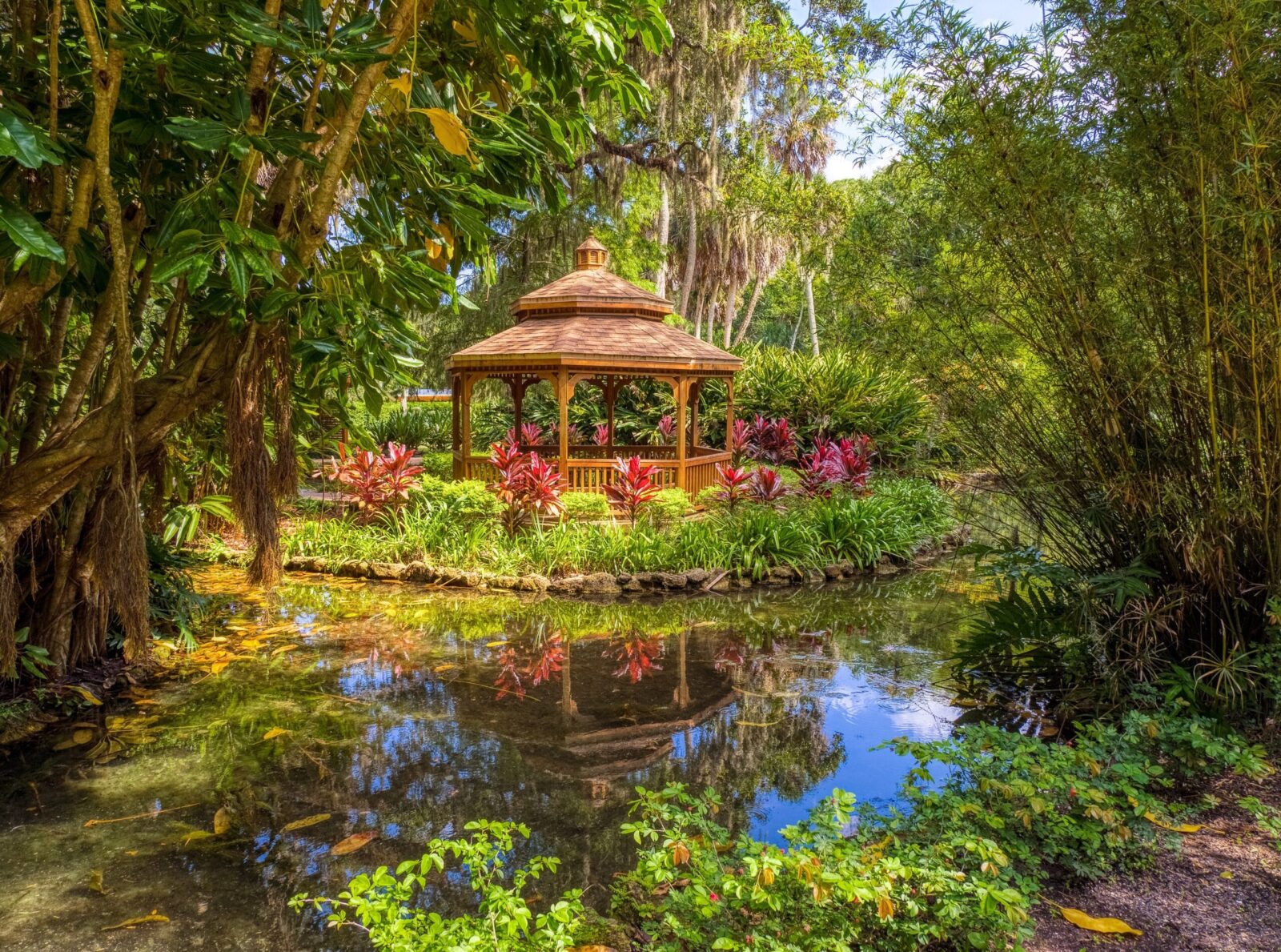
The Formal Gardens at Washington Oaks Gardens State Park
The formal gardens are the heart of the park: about 20 acres of shell paths, reflection ponds, and planted beds tucked under a canopy of live oak, hickory, and magnolia on the riverside of A1A. Louise Young designed most of what you see from the 1930s through the 1950s, and her gift to the state came with a condition: the gardens be kept in their original form.
Highlights:
- The rose garden. More than 150 hybrid tea rose bushes in ten beds. The first blossoms appear in May, and over a thousand blooms fill the 3,000 sq. foot grand circle. They continue to bloom throughout the summer. Since roses need a dormant period, they are cut back in February, and the months through April are resting months.
- The Washington Oak. The enormous live oak at the center of the gardens is estimated to be 200 to 300 years old. It has survived hurricanes, droughts, and fires, and its limbs spread wide enough to shade half the lawn.
- The reflection ponds and gazebo. Winding paths lead past still, mirror-like ponds and a small gazebo that’s one of the best spots in the park to sit for ten minutes and just listen to the birds.
- Azaleas, camellias, and bird of paradise. The gardens mix native Florida plants with exotics, so something is almost always flowering. Camellias peak in winter, azaleas in early spring.
- The sulfur spring. You’ll smell it before you see it. The bubbling spring is tucked under the canopy of moss-draped oaks that shade the garden.
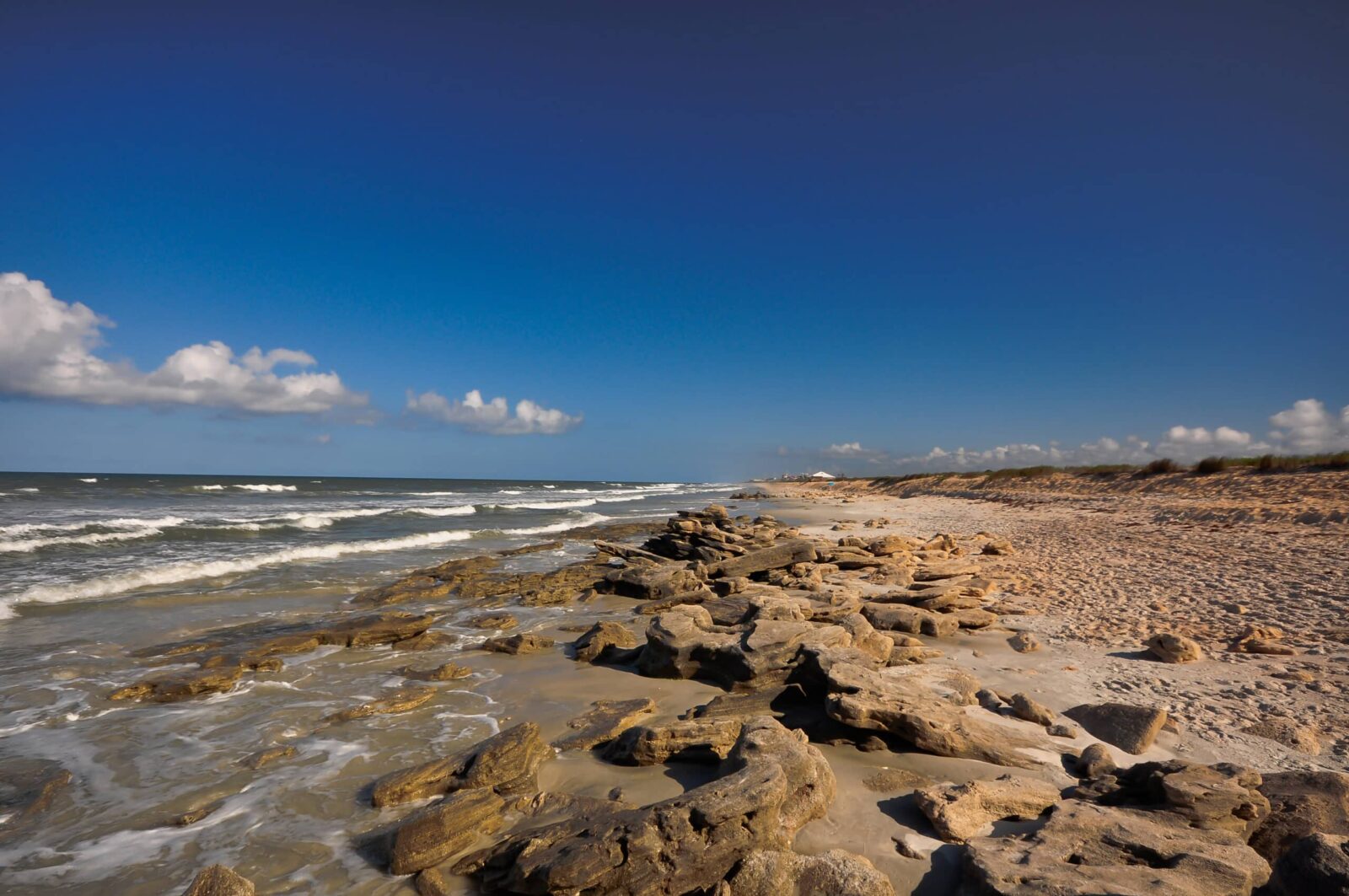
The Coquina Rock Beach at Washington Oaks
The beach at Washington Oaks is covered in coquina rock, a natural sedimentary stone made from countless tiny shells and shell fragments cemented together over thousands of years. It’s part of the same Pleistocene-era Anastasia Formation. Coquina rocks supplied the stone for the Castillo de San Marcos in St. Augustine.
The beach terrain is otherworldly. As you walk the shore, you will notice massive outcroppings, nooks and crannies, small caves, and holes carved out by acidic rain and crashing waves. If the tides have brought in more sand than usual, you may get to the shore and see nothing more than a few bumps in the sand.
Birds and Wildlife at Washington Oaks State Park
Washington Oaks is a stop on the Great Florida Birding Trail, and more than 200 bird species have been recorded in the area. The park packs three habitats into a narrow strip of barrier island, so a single visit can turn up very different birds.
-
- Gardens and hammock: songbirds, woodpeckers, and migrating warblers in spring and fall, plus plenty of butterflies.
- Tidal marsh and river: herons, egrets, wood storks, and roseate spoonbills along the Matanzas River and the Mala Compra Trail.
- Beach and offshore: shorebirds working the tide pools, and in winter, northern gannets diving for fish just past the breakers. Bald eagles are also seen in the area.
On the riverside, watch for manatees in the warmer months, and dolphins year-round.
The Best Time to Visit Washington Oaks
Spring is the prettiest season at Washington Oaks, but there’s no bad time to go if you plan around the heat and the tides. Whatever the month, time your beach visit for low tide. That matters more than the season for how much of the coquina you’ll actually see. For a better explanation of seasons on the Flagler Coast, see our guide to the best time to visit Florida.
At high tide, much of the rock is underwater, and the beach can look narrow. At low tide, the ledges open up, and the tide pools fill with small crabs, snails, anemones, and the occasional sea star. Check a tide chart the night before and aim to arrive about an hour before low tide. Morning low tides also give you the softest light for photos.
A Day Trip to Washington Oaks From Island Cottage Inn
Here’s the half-day plan we suggest to guests. Adjust the timing so you hit the beach closest to low tide.
- Start the day with breakfast at the inn. Grab gourmet coffee, fresh banana bread, yogurt, and fruit, and take it out to the veranda.
- Drive north on A1A. It’s about 25 minutes of ocean views and dunes, with very little traffic.
- Walk the half-mile garden loop past the Washington Oak, admire the rose garden, and the ponds before it gets warm.
- Cross A1A to the ocean side. Here you can take the iconic Washington Oaks Gardens State Park photos of the coquina rock formations and observe the tide pools.
- Add the 1.9-mile Bella Vista Trail loop if you’re up for a walk in the shade.
- We offer a lovely add-on picnic package with gourmet sandwiches, chips, cookies, and fruit, perfect for a picnic for two under the oaks.
- Head back to the inn. Take a dip in the courtyard pool, then relax on your balcony before heading out for dinner in Flagler Beach. On Fridays, join us for happy hour first.
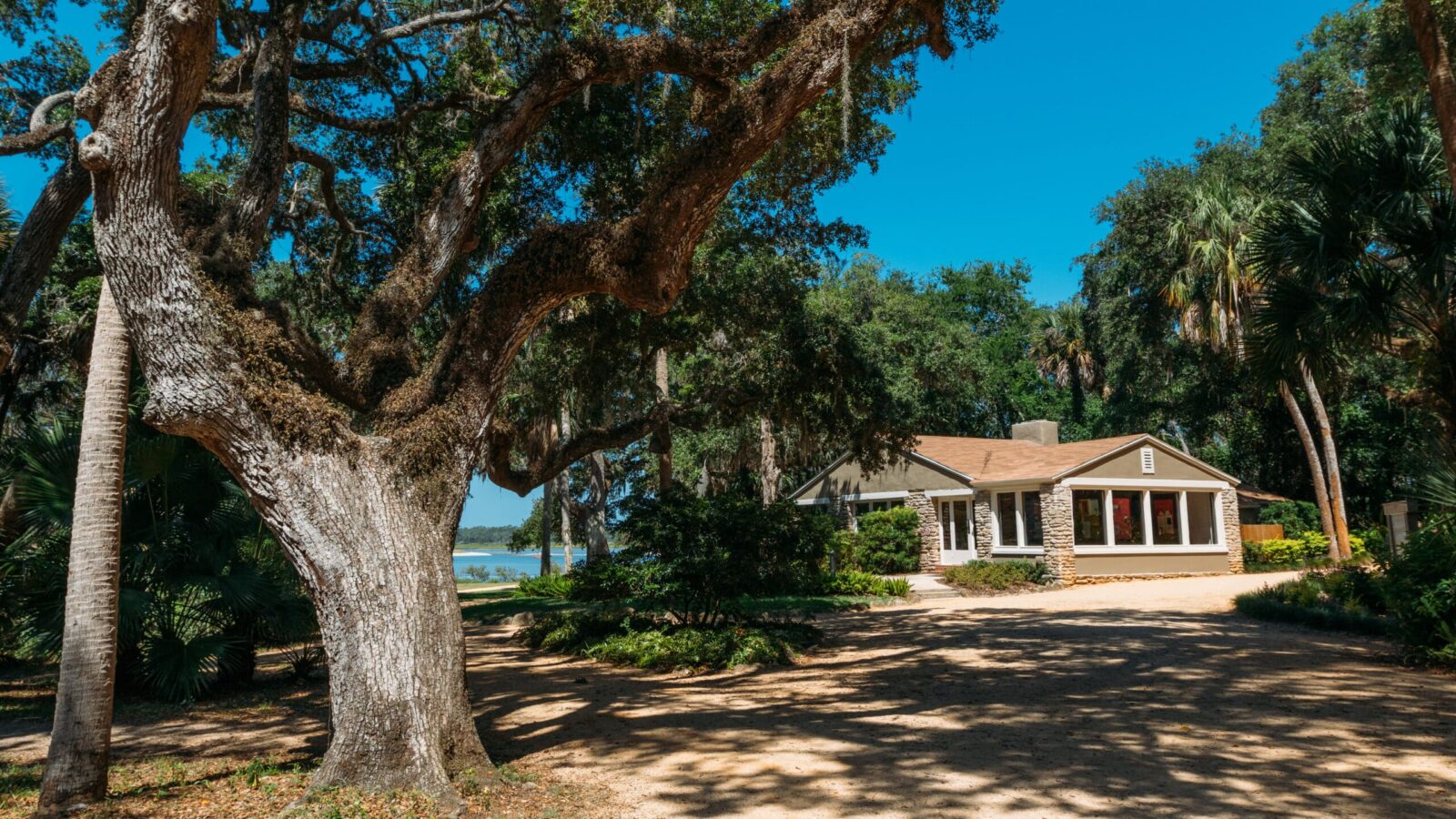
The Visitor Center at Washington Oaks State Park
The Youngs’ 1938 winter home sits on a rise overlooking the Matanzas River and now serves as the visitor center. Inside you’ll find period furniture, a timeline of the property’s history, a small gift shop, and air conditioning on a summer afternoon. The park also hosts First Friday garden and history walks and Second Saturday plant sales, which are worth planning around if your dates line up.
How Washington Oaks Got Its Name
The park isn’t named after the big oak in the gardens, which surprises many people. The name blends two separate histories: a 19th-century owner who was a relative of President George Washington, and the grove of live oaks that the property’s last private owners loved.
In the early 1800s, the land was part of Bella Vista, a plantation owned by General Joseph Hernández, a St. Augustine politician and militia leader in the Second Seminole War. In 1845, his daughter Louisa married George L. Washington, a surveyor and a distant relative of the first president, and locals came to know the land as “the Washington place.”
In 1936, Louise Powis Clark, a New York designer, and her husband Owen D. Young bought the property as a winter retreat. Young was chairman of General Electric and a founder of RCA, and Time magazine named him its 1929 Man of the Year. The couple built their house facing the river in 1938, planted the gardens, and gave the estate its current name, Washington Oaks, in honor of the Washington connection and the old oaks on the land.
Owen Young died in 1962. Shortly before her own death, Louise gave most of the property to the State of Florida, asking that the gardens be kept as she had designed them. The park opened quietly on January 1, 1965, and the gardens and historic buildings are now listed together as the Washington Oaks Historic District.
Things to Do Near Washington Oaks State Park
- Marineland Dolphin Adventure (about 2 miles north). The world’s first oceanarium, now a place for dolphin encounters. See our Marineland guide.
- Ragga Surf Cafe (Marineland). The blue school bus cafe we send everyone to for lunch, with picnic tables facing the ocean.
- River to Sea Preserve (Marineland). Free riverside trails and a quiet beach on the ocean side, with more coquina outcrops to explore.
- Fort Matanzas National Monument (about 15 minutes north). A short ferry ride takes you to a 1740s Spanish coquina fort guarding Matanzas Inlet. It’s a neat bookend, since the fort is built from the same kind of stone you just walked on. Note: The ferry does not run Tuesdays or Wednesdays.
- Palm Coast (about 15 minutes south). Waterfront parks, trails, and restaurants. Our guide to things to do in Palm Coast has the full list, and our roundup of Palm Coast beaches covers our favorite spots.
Making a road trip of it? Our A1A scenic drive guide maps the whole coastal route, and our day trips from Flagler Beach roundup covers St. Augustine, Daytona, and more.
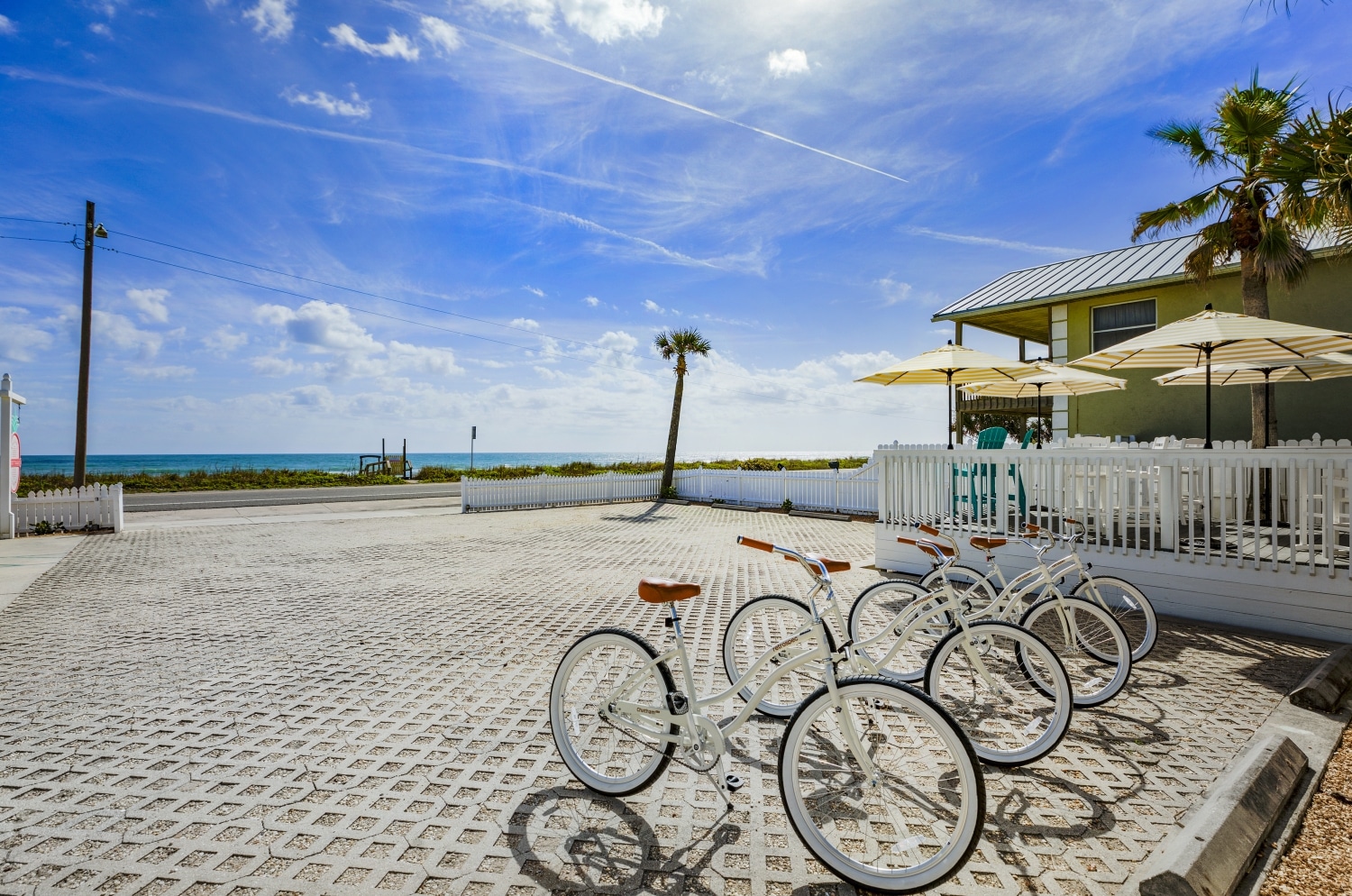
Hotels Near Washington Oaks State Park: Stay With Us in Flagler Beach
Washington Oaks is day-use only, and the stretch of A1A around it has very few places to stay, so most visitors base themselves in Palm Coast, St. Augustine, or Flagler Beach. We prefer the small surf-town feel of Flagler Beach, and you come back from a day of gardens and tide pools to the ocean right outside your door. Island Cottage Inn is an adults-only, oceanfront inn with nine suites on a quiet stretch of South Oceanshore Boulevard.
Here’s what’s waiting when you get back:
- A private beach with chairs, umbrellas, and towels to borrow, for the swim you couldn’t take at Washington Oaks.
- A courtyard pool for an afternoon dip.
- Suites tailor-made for relaxation, with premium Helix mattresses, fine linens, and seating areas; many have ocean views, and some have fireplaces or kitchenettes.
- Complimentary continental breakfast.
- Friday happy hour.
- Complimentary bikes for exploring Flagler Beach.
- Dog-friendly suites if your pup is joining the trip. Learn more about our dog-friendly hotel in Flagler Beach.
Turn a garden visit into a full romantic getaway; our packages add extras like roses and champagne. Browse our suites or book your stay directly with us.
Washington Oaks State Park FAQ
How much is the admission fee to Washington Oaks State Park?
Entry is $5 per vehicle with two to eight people, or $4 for a single-occupant vehicle. Pedestrians and cyclists are $2 per person. You pay at an honor box, so bring correct change. Alternatively, you can purchase a single-use visit online before you go.
What are the hours of Washington Oaks State Park?
The park is open from 8 a.m. until sundown, 365 days a year.
Can you swim at Washington Oaks Gardens State Park?
Swimming isn’t recommended. The coquina rocks sit where the waves break, and the undertow is strong, so the beach is best for walking, tide pooling, and photos.
Are dogs allowed at Washington Oaks?
Leashed dogs are welcome in outdoor areas like the trails and picnic grounds.
Can you get married at Washington Oaks State Park?
Yes. The gardens are a popular wedding spot, and the Friends of Washington Oaks handles pavilion rentals. Reservations open no more than 10 months ahead. Planning something smaller and more private? Ask us about intimate ceremonies and vow renewals on our own oceanfront beach.