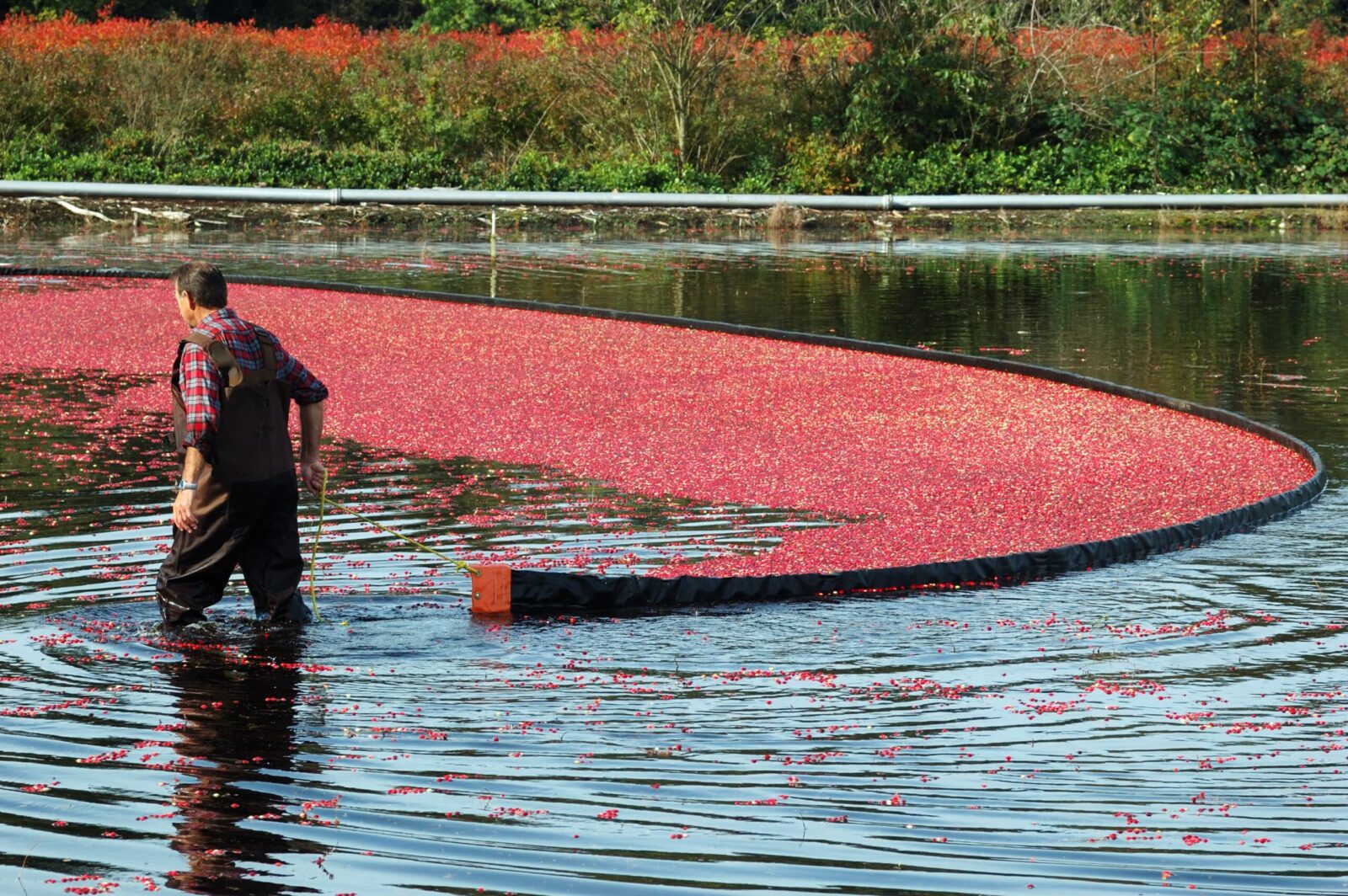
Drive Highway 101 around Bandon in late October, and you’ll pass fields that look like someone spilled a few acres of red paint across the valley floor. Those are the cranberry bogs of Oregon’s South Coast at the height of harvest, and they’re one of the most striking sights on the entire Oregon Coast. More than 140 years ago, a gold prospector gave up on his dreams of striking it rich in California and began cranberry farming with cuttings he’d brought with him from Massachusetts.
Bandon is the center of Oregon’s cranberry farming. Growers here raise nearly all of the state’s crop, and when the bogs flood for harvest each fall, the whole landscape changes color for a few short weeks. If you’ve ever wanted to understand how a small coastal town became famous for a tart little berry, this is the season to come.
The Inn at Face Rock is a short drive from the bogs and a short walk from Face Rock State Scenic Viewpoint, so you can spend the morning photographing flooded fields and still make it back to the beach for sunset. Cozy suites with fireplaces, an indoor pool, and a hot breakfast make it perfect place to stay for a fall trip. Book your stay today.
Why Bandon Is Oregon’s Cranberry Capital
Bandon is known as the cranberry capital of Oregon because the area around town grows almost all of the state’s cranberries. Roughly 80 growers work bogs near Bandon, and Coos and Curry counties together produce about 95 percent of Oregon’s crop on around 3,000 acres.
That makes Oregon one of the country’s major cranberry states. When people ask where cranberries are grown in the U.S., the answer usually starts with Wisconsin and Massachusetts, followed by New Jersey, Oregon, and Washington. Oregon typically ranks third or fourth nationally. In 2025, Oregon growers harvested more than 500,000 barrels, roughly 50 million pounds of fruit, bringing close to $17 million into local economies.
What’s remarkable is how local the industry still feels. These are mostly family farms, many of them multigenerational, working the same sandy ground their parents and grandparents did.
A Short History of Cranberry Farming on the Southern Oregon Coast
Cranberries are native to North America, and wild bog cranberries grow naturally in the wetlands of northwest Oregon. Indigenous people gathered them long before any farm existed, and early settlers valued the berries because their waxy skins kept them from spoiling on long voyages and through the winter.
Commercial cranberry farming in Oregon began with Charles D. McFarlin, a gold prospector who came west. In 1885, he gave up panning, moved to Coos County, and planted cranberry cuttings he’d brought from his home in Massachusetts. His first bog was near Hauser, north of Coos Bay, and it kept producing for roughly eight decades.
The variety he planted was later named the McFarlin in his honor, and it produces larger berries than Oregon’s native bog cranberry. McFarlin himself had doubts about it. The berries didn’t ripen until October, which meant they reached the San Francisco market at the same time as the East Coast crop. In a 1900 letter, he complained, “I find myself in competition with the Eastern product.” Other growers disagreed, and the McFarlin cranberry became the backbone of West Coast cranberry farming for generations. It’s still grown around Bandon today, alongside newer varieties such as the Stevens.
For the first half of the twentieth century, harvest was entirely manual. Workers used wooden scoops fitted with a row of teeth along one edge, sweeping them through the vines to loosen the berries. Much of that labor came from Native people in the region. It was slow, backbreaking work, and it kept Oregon’s industry small.
Everything changed in 1946, when the national grower cooperative Ocean Spray opened membership to Oregon farmers. Suddenly, a South Coast grower had access to national markets, processing, and distribution. Acreage grew, mechanized harvesting followed, and Bandon’s identity as a cranberry town took hold for good.
Bandon Cranberry Farming: A Harvest Worth Celebrating
In 1947, just a year after Oregon growers joined Ocean Spray, Bandon threw its first party for the crop. The town has celebrated its cranberry heritage every September since 1947, a tradition that marked its 80th year in 2026. You can read all about it in our guide to the Bandon Cranberry Festival. The festival arrives just before the real harvest begins, though. If you want to see the bogs at their reddest, plan a second trip for later in the fall.
When Is Cranberry Harvest Season in Bandon?
Cranberry harvest in Bandon usually runs from mid-October through November, and some growers keep going into early December. The busiest stretch, when you’re most likely to see flooded bogs along Highway 101, typically falls in late October and early November.
Oregon’s harvest comes later than in most cranberry states. The yearly cycle looks roughly like this:
Winter: The vines go dormant.
April: The plants break dormancy; essentially, they wake up.
June: They bloom.
July: They set fruit.
Mid-October onward: Harvest begins.
Growers in colder states often start harvesting by late September to beat the first frost. The South Coast’s mild autumns give Bandon’s berries extra weeks on the vine, resulting in a deeper red color and naturally higher sugar content.
If you’re building a fall trip around the harvest, our guide to Bandon Oregon weather in the fall covers what to pack and what to expect from October and November on the coast.
How Are Cranberries Harvested? Wet Harvest vs. Dry Harvest
Here’s what surprises most people: cranberries don’t grow in water. They grow on low, trailing vines in sandy soil, in beds that are called bogs because early East Coast growers planted them in boggy wetlands. Around Bandon, many bogs are built in tiers down a slope, with a reservoir at the bottom that catches the region’s generous rainfall. The bogs stay dry most of the year and are only flooded at harvest time.
Wet harvest is the method behind all those famous red-water photos. It works in four steps:
- Growers flood a bog with several inches to a couple of feet of water.
- A machine called a beater, or reel, churns through the vines to knock the berries loose.
- Each cranberry has tiny air pockets inside, so the loosened berries float to the surface.
- Workers in waders use floating booms to herd the berries toward a pump or conveyor, which loads them onto trucks.
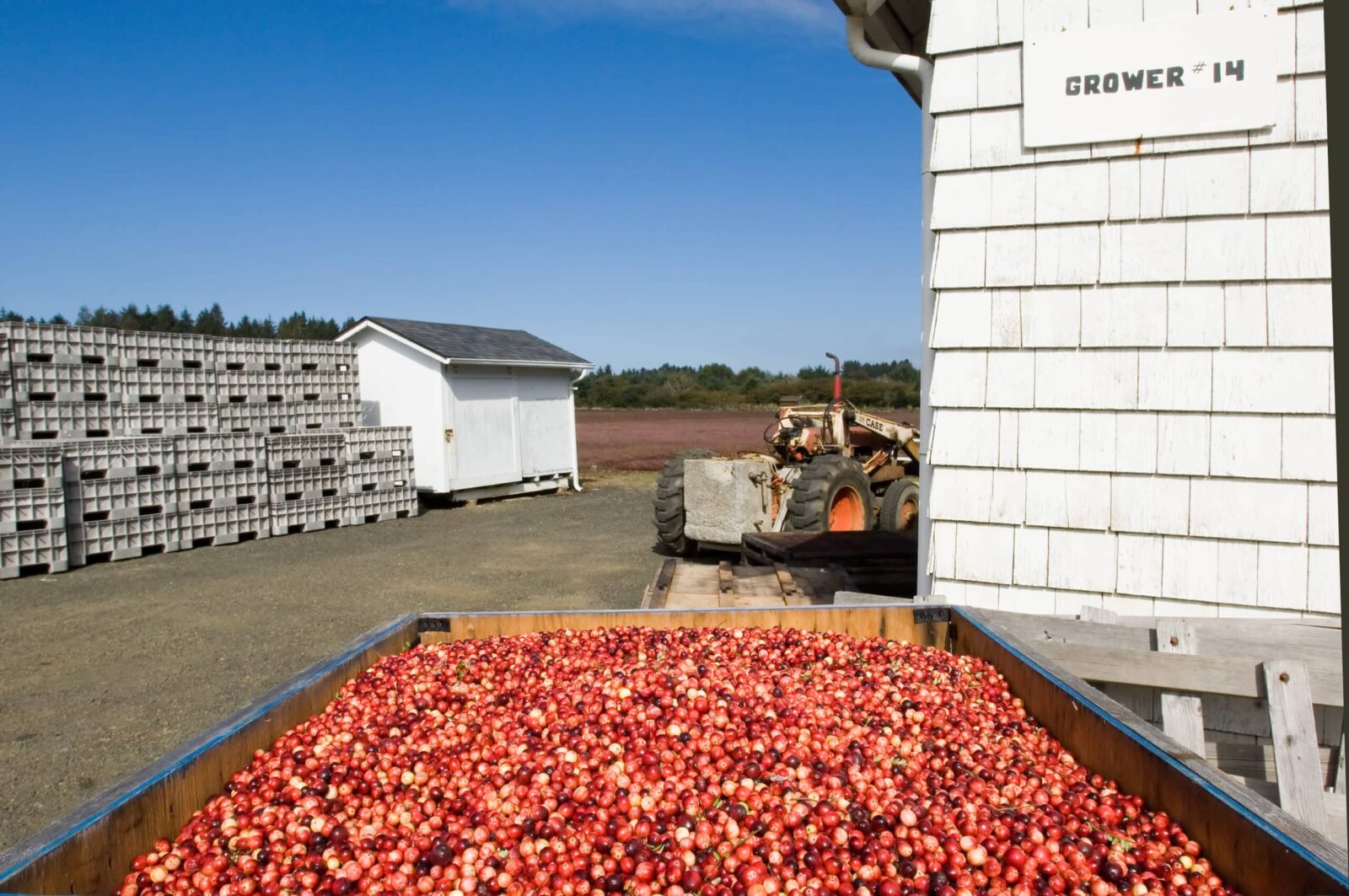
Wet-harvested fruit mostly becomes juice, sauce, and dried cranberries.
Dry harvest, as the name implies, skips the water entirely. A few Bandon-area farms use walk-behind machines that comb berries from the vines, much like a mechanical version of the old hand scoops. Dry-harvested berries hold up better, so this method is favored for fresh fruit.
Where to See Cranberry Bogs Near Bandon
The easiest way to see Oregon cranberry bogs is simply to drive. During peak harvest, you can see flooded fields from Highway 101 both north and south of Bandon. Watch for bright red water in low, rectangular fields.
For a closer look, a few farms welcome visitors:
- Bowman Bogs – Grandpa Jack’s Cranberries offers guided bog tours by appointment and runs a farm stand with cranberry syrup and concentrate. Bring cash, since many local farm stands don’t take cards.
- Peters’ Cranberries, a third-generation family farm in Sixes south of Bandon, sells fresh berries at its farm stand during the season.
- The Berry Byway is a segment of the Wild Rivers Coast Food Trail running between Port Orford and Bandon. It strings together farm stands and cranberry-related stops, and it makes a great half-day drive.
Back in town, you can taste the harvest at Face Rock Creamery. Their cranberry walnut cheddar uses berries from a family farm just a few miles away.
Tips for Photographing the Bogs
The bogs are some of the most photogenic subjects on the coast; here are some things to keep in mind:
- Stay on public ground. Nearly every bog is on private, working farmland, so shoot from road shoulders and safe pullouts unless you’ve booked a tour. Do not walk onto the dikes or into the fields.
- Go early. Morning light is soft and low, the water is usually calm, and crews are just getting started. Harvesters say that when wind and current push the floating berries together, the surface starts to look like a red mosaic. That’s the shot you want.
- Don’t write off a gray day. Overcast skies tend to saturate the reds, while bright sun gives you that bold red-against-blue contrast.
- Bring a polarizing filter. It cuts the glare on the water and makes the color pop.
- Pack waterproof boots. Roadside shoulders near the bogs get muddy fast in October.
After a morning in the bogs, head back toward the ocean. Late-season light at Face Rock State Scenic Viewpoint is some of the best of the year, and pairing flooded fields with sea stacks at sunset makes for a pretty unforgettable day of photos.
For more ideas to fill out your trip, browse our complete guide to things to do in Bandon, Oregon, or explore the wider Southern Oregon Coast.

Stay at the Inn at Face Rock for Cranberry Harvest Season
Late fall is one of the best times to visit Bandon. The summer crowds are long gone, the bogs are at their reddest, and you might even catch the first storm of the season. You’ll want a warm, comfortable room to come back to.
The Inn at Face Rock sits right across from Face Rock State Scenic Viewpoint, with a private trail down to the beach. Our guest rooms feature gas fireplaces for chilly October evenings. A hot breakfast gets you out the door early enough to catch the morning light on the bogs, and select rooms are pet-friendly, so the whole family can come along.
Check our specials and packages for fall rates, then book your harvest season stay directly with us.
Frequently Asked Questions about Cranberry Farming in Bandon
Which city is known as the cranberry capital of Oregon?
Bandon. The area around town is home to roughly 80 cranberry growers, and Coos and Curry counties produce about 95 percent of Oregon’s cranberry crop.
When is cranberry harvest season in Oregon?
Oregon cranberries are usually harvested from mid-October through November, and some farms continue into early December. Late October and early November are typically the best time to see flooded bogs near Bandon.
Are cranberries grown in water?
No. Cranberries grow on vines in sandy soil. Bogs are flooded only at harvest, when the ripe berries float to the surface so they can be gathered.
Why are cranberries harvested in water?
Each berry has small air pockets inside, so they float. Flooding the bog and knocking the berries loose lets growers corral millions of them on the surface quickly, which makes wet harvest far faster than picking by hand.
Can you tour a cranberry bog near Bandon?
Yes. Bowman Bogs – Grandpa Jack’s Cranberries offers guided bog tours by appointment, and farm stands along the Berry Byway between Port Orford and Bandon sell fresh berries during the season. Most bogs are private property, so please view them from the road unless you’ve booked a tour.
Who started cranberry farming in Oregon?
Charles McFarlin, a gold prospector from Massachusetts, planted Oregon’s first commercial cranberry bog in Coos County in 1885 using vines he brought from home. The McFarlin variety, named after him, is still grown around Bandon.