Columbia River Gorge Fall Foliage doesn’t get the New England kind of attention for autumn color, but it should. Every October, the maples along the Historic Highway light up in gold and red and the summer crowds clear out. If you’re trying to figure out when to come, where to hike, and what else to build a trip around, here’s what you need to know for planning a Columbia River Gorge fall visit this year.
When Does the Columbia River Gorge Fall Foliage Peak?
Plan on late September through mid-October for the start of color, with most of the Gorge hitting peak between the second and last week of October. Once color arrives, it tends to hold for about two weeks before it starts to fade, so you have a reasonably forgiving window even if your dates aren’t perfectly timed.
Foliage doesn’t turn all at once, and that’s actually good news if you’re trying to plan around it. Elevation, moisture, and which trees are growing where all affect timing:
- Lower elevations and the west end of the Gorge (closer to Portland and Carson) tend to color first, since these areas warm up and cool down faster.
- Higher trailheads and the east end, toward Hood River and the drier side of the Gorge, often hold their color a week or two longer.
- Bigleaf maples turn a deep gold, vine maples go red and orange, and the cottonwoods and red alders along the river add a softer yellow to the mix. That contrast against the evergreens is a big part of why the Columbia River Gorge fall colors are so stunning and just as worthy as the more famous East Coast leaf-peeping spots.
If you want a real-time check before you lock in dates, a live foliage tracker is worth a quick look the week before you travel, since actual conditions shift year to year with rainfall and temperature.
One more thing worth knowing if you’re comparing destinations: the Columbia River Gorge landed at #2 on Priceline’s list of the most-searched fall foliage destinations for 2026, right behind the Adirondacks and ahead of Aspen and Stowe. It’s not a surprise to anyone who’s driven the Historic Highway in October, but it’s a good sign that this is shaping up to be a busier fall than usual, so booking your cabin and any dinner reservations early will save you from disappointment. Reserve your stay today!
The Best Columbia River Gorge Fall Hikes
Fall might be the best season to hike the Gorge, and not just for the color. The summer crowds have cleared out, daytime temperatures are comfortable, and you’re hiking ahead of the heavy winter rain. Here’s a mix of easy, moderate, and longer hikes that are especially good picks for autumn, most of them within a short drive of Carson Ridge.
A quick note on the difficulty labels below, since “easy” and “moderate” mean different things depending on who you ask:
- Easy hikes here run under 3 miles round trip with minimal elevation gain, generally under 300 feet. Flat or gently sloped trail, suitable for most fitness levels, and a reasonable pick even if you’re short on time.
- Moderate hikes run roughly 3 to 8 miles round trip with somewhere between 500 and 2,500 feet of elevation gain. Expect some sustained climbing and uneven or rocky footing in spots. Fine for anyone with regular hiking experience, but plan for a few hours out.
- Longer or car-free hikes are grouped separately below since they don’t fit neatly into effort-based tiers. These tend to be long-distance trails that are flat enough to feel easy per mile, but rack up real distance overall, so budget your time accordingly rather than judging them by steepness alone.
Easy Columbia River Gorge Fall Hikes
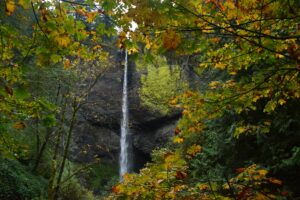
Panther Creek Falls Trail is a short, 0.3-mile out-and-back in Gifford Pinchot National Forest that ends at a 50-to-70-foot waterfall split into two tiers. It’s an easy add-on to a longer day, and October is by far the best month to see it, since the surrounding maples color up right around the falls.
Latourell Falls Loop is the closest major Gorge waterfall to Portland. The trail is an easy 2.4-mile round-trip that drops 249 feet. Perfect for a waterfall payoff without a long approach, and the fall color along the loop trail makes it even better.
Catherine Creek is an easy, mostly flat trail on the drier east side of the Gorge, known for a natural rock arch along the way. It connects to the Coyote Wall area if you want to extend the walk. Known for spring wildflowers, it’s equally beautiful with warm fall color on the oak and shrub cover.
The flat Klickitat Trail is a former rail line that runs along the Klickitat River, making it a good choice if you want scenery without much climbing. The oaks and shrubs along this stretch turn a warm gold in the fall, which is easy to underestimate until you see it in person.
Moderate Columbia River Gorge Fall Hikes
Hamilton Mountain Loop is a hike that shows you why people plan their entire getaways around Gorge Scenery. The trail is an 8.1-mile loop rated difficult, with about 2,286 feet of elevation gain, that passes Rodney Falls on the way to sweeping views of the Gorge. Bring a Discover Pass, get to the trailhead early on weekends since the lot fills up, and plan a full day out.
Starting near the Bridge of the Gods on the Pacific Crest Trail, the Dry Creek Falls hike winds through gold-leafed maple forest before reaching a 75-foot waterfall. It’s a good middle-distance option.
Grassy Knoll might be better known as a spring wildflower hike, but the fall version has its own appeal, with changing colors set against long views of Mount Adams. Worth considering if you’ve already done the more obvious Gorge hikes and want something with fewer people on the trail.
Longer or Car-Free Hiking Options
Mark O. Hatfield Trail (Mosier Twin Tunnels) is a car-free section of the Historic Columbia River Highway State Trail that runs 10 miles round trip near Hood River and is well-suited for cyclists and hikers. It’s flat and an easy way to give your legs a break after climbing all weekend.
A few more Gorge classics deserve a mention even though they’re not the focus here: Cape Horn, Larch Mountain, and the waterfall-dense Gifford Pinchot backcountry (including Lower Lewis Falls and Falls Creek Falls) are all excellent in fall color, and each has its own detailed trail guide on our blog, worth checking before you go if any of those are on your list.
One practical note if Cape Horn is on your radar: the full loop is only open from July 16 through January 31 each year (the lower section closes February through mid-July for peregrine falcon nesting), so fall is actually one of the best times to catch the whole trail without a closure getting in your way.
What to Bring on a Fall Hike in the Gorge
Layers matter more in fall than almost any other season here. Mornings can start cold and damp, afternoons warm up fast, and wet, leaf-covered sections of trail get slick in a way that catches people off guard. A light waterproof layer, shoes with traction, and a headlamp if you’re hiking near sunset will cover most of what fall throws at you. Trailheads also fill up faster than you’d expect on clear October weekends, so an early start helps with both the parking and the crowds.
Other Things to Do in the Gorge This Fall
Hiking is the main event, but it’s not the only reason to plan a Columbia River Gorge fall getaway.
Drive the Historic Columbia River Highway. This is the oldest scenic highway in the country, and it’s one of the best fall drives in the Pacific Northwest, hands down, with viewpoints at Crown Point and Vista House framing the river and the changing hillsides below. We’ve got a full guide to the drive, with a complete list of stops, if you want to plan the route in detail.
Visit the Hood River Fruit Loop. By fall, the Fruit Loop shifts from summer berries into apple season, with cider pressing and harvest festivals at several stops. It’s perfect with a Carson Ridge stay since it’s a short drive from the cabins, and we’ve written a more detailed farm-by-farm guide if you want to plan out which stands to hit.
Taste wine during harvest season. Fall is harvest time for the Columbia Gorge’s wineries, and several open up their harvest activities to visitors. If wine is a priority for your trip, our Hood River wineries guide breaks down which spots are worth the drive.
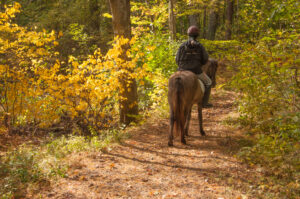
Go horseback riding. Northwest Lake Riding Stables runs guided trail rides through the end of October, making for a nice, lower-effort alternative to hiking if you want to see the foliage without covering the miles on foot.

Where to Stay in the Columbia River Gorge This Fall
However you spend the day, you’ll want somewhere comfortable to land at the end of it, and this is where Carson Ridge Luxury Cabins excels. Our property sits on nine acres of forest and meadow near Carson, Washington, close enough to Multnomah Falls and Beacon Rock State Park that you can be on a trail in minutes, and far enough into the trees that the fall color shows up right outside your cabin window.
Each of the ten cabins comes with a private jetted tub, a porch, and its own fire pit setup, which makes for an ideal way to close out a day of hiking. Browse the full lineup of luxury cabins to find the layout that fits your trip, and if this is a special-occasion getaway, take a look at current fall packages before you book.
Frequently Asked Questions
When is peak Columbia River Gorge fall foliage?
Most years, peak color falls between the second and last week of October, though it can start as early as late September at lower elevations and hold into early November at higher, cooler spots.
What are the best fall hikes near Multnomah Falls?
Latourell Falls, Angel’s Rest, and Dry Creek Falls are all within a short drive of Multnomah Falls and offer strong fall color without the length or difficulty of a full-day hike.
Is the Columbia River Gorge crowded in the fall?
Less crowded than summer overall, but popular trailheads and viewpoints still fill up on clear October weekends. Arriving early in the day is the easiest way to avoid the worst of it.
What should I pack for fall hiking in the Gorge?
Layers, a waterproof shell, shoes with solid grip for wet or leaf-covered trails, and a headlamp if there’s any chance you’ll still be out at sunset.
Are all the Gorge trails open in the fall?
Most are, and fall is actually a good season for a few trails with seasonal closures elsewhere in the year. The Cape Horn Loop, for example, is fully open from July 16 through January 31, covering the entire fall season.
Plan Your Fall Getaway to the Gorge
The Columbia River Gorge fall doesn’t last long, but it’s worth building a trip around. Browse our luxury cabins in Washington and make Carson Ridge your home base for this year’s foliage season. Reserve your cabin now.