Oregon Coast whale watching season runs longer than most visitors expect, and figuring out exactly when to plan a trip is the first question we get from almost every guest. The short answer is that gray whales migrate south from Alaska to Mexico each winter, usually mid-December through mid-January, then turn around and head back north from late March through June. Summer brings a different crowd entirely, as humpbacks and orcas follow their own migration routes to our rocky shores from June through September. Put it all together, and whales show up along this stretch of coast in some form nearly every month of the year.
If you’re chasing the biggest show, plan around the spring migration, when hundreds of gray whales pass close enough to shore to make Face Rock Scenic Viewpoint and Coquille Point some of the best whale-watching spots on the entire coast, all the way through June. Winter offers a shorter but still reliable window too, as the same whales head south in the other direction from mid December through mid January. Summer works differently, since resident whales linger off the coast rather than migrating through, and this is also when humpbacks and orcas follow their own seasonal routes past Bandon, feeding in the shallows and occasionally surfacing close enough to spot without binoculars.
Wherever you land on the calendar, staying close to the action matters. The Inn at Face Rock sits an easy walk from Face Rock Viewpoint, so you can check conditions in the morning and be standing at the rail within minutes if the spouts start showing. Among Bandon Oregon hotels, it’s one of the few built for exactly this kind of spontaneous trip to the bluff, private path to the beach, an indoor pool and hot tub for warming up, and a breakfast buffet to fuel your whale watching adventures. Book your stay today!
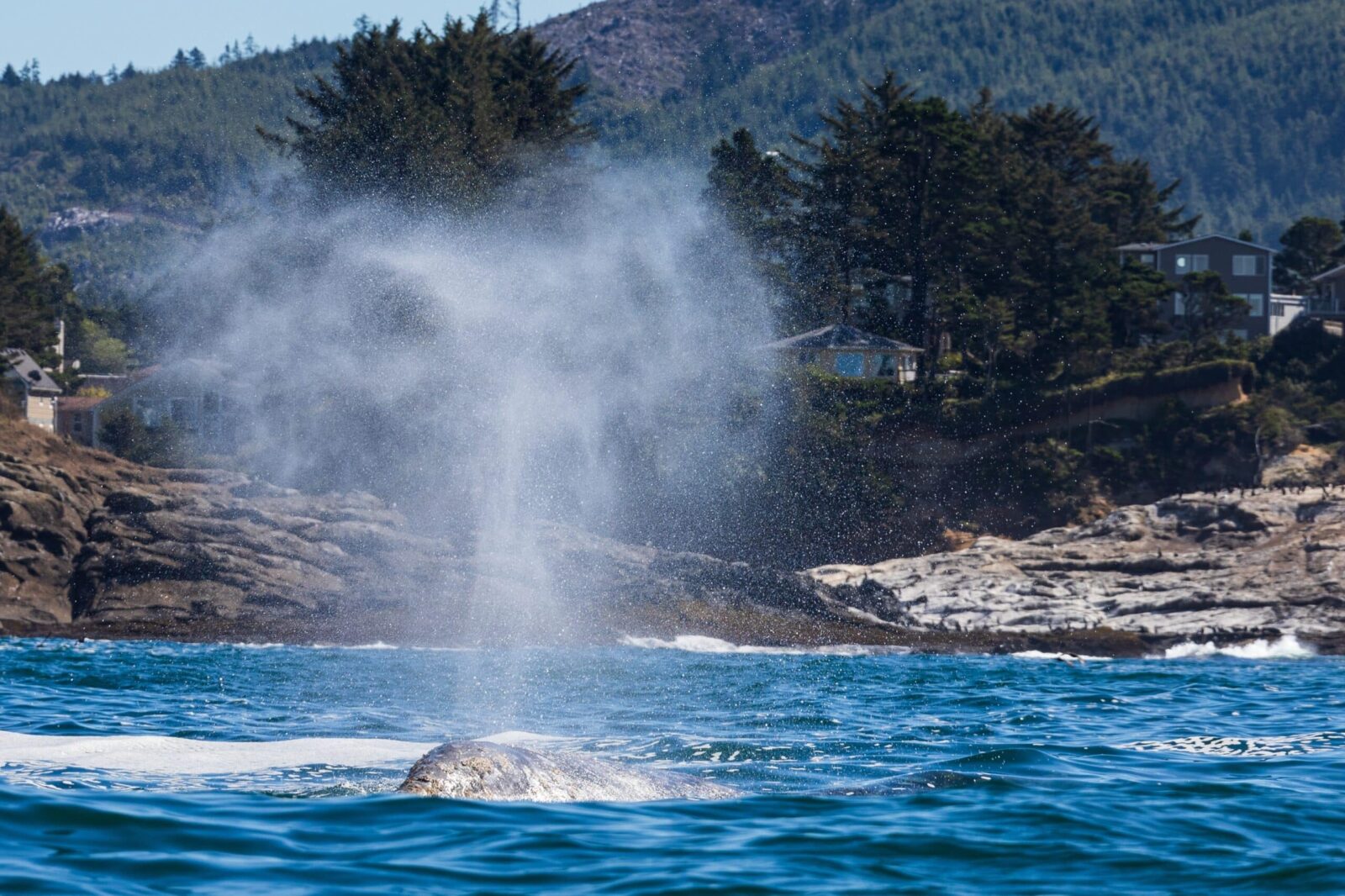
When to Plan Oregon Coast Whale Watching Trips
Oregon Coast whale watching season breaks into three windows, and each one offers something a little different depending on what you’re hoping to see.
Spring, from late March through May, is the headline season. Gray whales migrate north past Bandon in the biggest numbers of the year on their way back to their Arctic feeding grounds, and Oregon’s Whale Watch Week brings trained volunteers to prime viewpoints along the coast to help visitors spot the spouts and occasional breaches. If you can time a trip around this window, it’s the single most reliable stretch for sightings.
Winter, from mid-December through mid-January, is the shorter counterpart, as the same whales travel south toward the warm waters of Baja California. The weather is rougher this time of year, but that works in your favor for storm watching, and whale sightings from Face Rock Viewpoint also offer dramatic wave action.
Summer and early fall, roughly June through October, belong to a different set of whales entirely. This is when humpbacks and orcas follow their own seasonal migration routes to our rocky shores, alongside resident gray whales that stay off the Oregon Coast rather than continuing on, feeding in the shallow water near the shore.
If you’re deciding between Oregon Coast whale watching windows, spring gives you the odds, winter gives you the drama, and summer gives you the widest variety of species.
The Best Whale Watching Tours Near Bandon, Oregon
Shore-based whale watching is free and often surprisingly good along this stretch of coast, but a guided tour gets you close enough to see details you’d never catch from a viewpoint: the texture of a barnacle-covered gray whale, the spray pattern of a breach, the size difference up close between a calf and its mother.
We recommend South Coast Tours out of nearby Port Orford. They run seasonal whale watching boat trips aligned with the migration windows, plus summer excursions for resident whales, and their route passes through Redfish Rocks Marine Research Reserve, so you’ll likely spot harbor seals, sea lions, and seabirds along the way too. Many tours also run right through pupping season each spring, when harbor seal pups start showing up on the rocks near shore, worth keeping a respectful distance from but a treat to spot regardless.

Why We Stand Apart from Other Bandon Oregon Hotels
Whales can even be observed from the shoreline from time to time at Bandon Beach Face. We suggest you grab a warm drink and take a walk – an activity best done with a pair of binoculars! Our Bandon Oregon Hotel is perfectly situated within walking distance of the beach and less than 10 minutes from the harbor, so no matter how you plan to experience whale watching on the Oregon Coast, the Inn at Face Rock is a great choice! Reserve your room now.
Frequently Asked Questions
When is Oregon Coast whale watching season?
Oregon Coast whale watching season runs almost year-round, but the two migration windows draw the biggest crowds of whales. Gray whales travel south from mid-December through mid-January, then return north from late March through May. Resident whales stick around from June through October.
What is the best time to see whales on the Oregon Coast?
Late March through May gives you the best odds, since that’s when the largest numbers of gray whales migrate north past Bandon. If you’d rather trade numbers for drama, the winter window from mid-December through mid-January pairs whale sightings with storm season on the coast.
Where is the best place to watch whales near Bandon, Oregon?
Face Rock Scenic Viewpoint and Coquille Point are the two most reliable shore-based spots near Bandon, both within a short walk of the Inn at Face Rock. For a closer look, South Coast Tours runs guided boat trips out of nearby Port Orford.
Can you see whales from shore on the Oregon Coast?
Yes, and Bandon is one of the better places to do it. Whales pass close enough to several viewpoints along this stretch of coast that binoculars are often all you need, though a guided boat tour will get you closer.
Do I need a tour to see whales in Bandon, Oregon?
No, shore-based whale watching is free, and there’s a strong likelihood you will see whales at places like Face Rock Viewpoint, especially during the spring and winter migration windows. A tour simply gets you closer and gives you a chance to spot other marine life, like seals and seabirds, along the way.